
Why Every Business Needs Digital Transformation in 2026
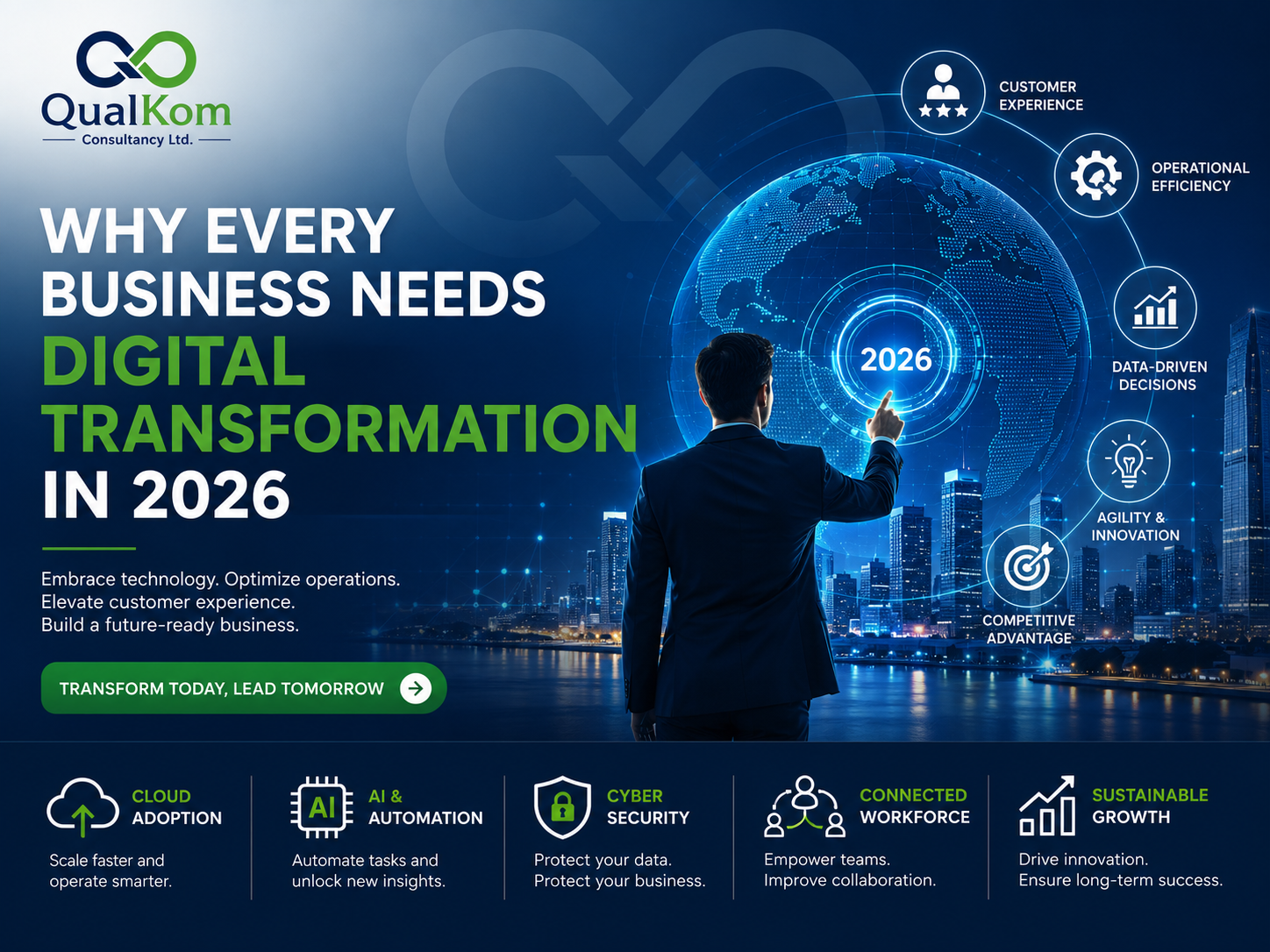
Stay Competitive, Improve Efficiency, and Future-Proof Your Business
In today’s fast-changing business environment, digital transformation is no longer a luxury—it’s a necessity. As we move through 2026, organizations of all sizes are embracing digital technologies to improve operations, enhance customer experiences, and stay ahead of the competition.
Whether you’re a startup, a growing enterprise, or an established company, investing in digital transformation can help you streamline processes, reduce operational costs, and unlock new opportunities for growth.
In this article, we’ll explore what digital transformation is, why it matters in 2026, and how businesses can successfully adopt digital technologies to achieve long-term success.
What Is Digital Transformation?
Digital transformation is the process of integrating digital technologies into every aspect of a business. It involves rethinking traditional processes, adopting modern tools, and using data-driven insights to improve efficiency, decision-making, and customer satisfaction.
Digital transformation can include:
- Cloud computing
- Artificial Intelligence (AI)
- Business process automation
- Data analytics
- Customer Relationship Management (CRM) systems
- Enterprise Resource Planning (ERP) software
- Cybersecurity solutions
- Mobile applications
- E-commerce platforms
- Internet of Things (IoT)
The goal is not just to digitize existing processes but to create smarter, more agile ways of operating.
Why Digital Transformation Is Essential in 2026
Businesses today operate in an increasingly digital world where customers expect faster services, seamless online experiences, and personalized interactions.
Companies that fail to modernize risk losing customers to competitors who embrace innovation.
Here are the key reasons why digital transformation has become essential.
1. Improved Operational Efficiency
Manual processes consume valuable time and increase the chances of human error.
Automation enables businesses to:
- Reduce repetitive tasks
- Improve productivity
- Minimize errors
- Speed up workflows
- Lower operational costs
Employees can focus on strategic work instead of routine administrative tasks.
2. Better Customer Experience
Modern customers expect businesses to provide convenient digital experiences.
Digital transformation enables organizations to offer:
- Online customer support
- AI-powered chatbots
- Faster response times
- Personalized recommendations
- Mobile-friendly services
- Self-service customer portals
Satisfied customers are more likely to become loyal customers.
3. Data-Driven Decision Making
Every business generates valuable data.
Digital tools help organizations analyze information to identify:
- Customer behavior
- Sales trends
- Market opportunities
- Operational bottlenecks
- Business performance
Instead of relying on assumptions, companies can make informed decisions backed by real-time data.
4. Enhanced Cybersecurity
As businesses become more digital, cybersecurity becomes increasingly important.
Digital transformation includes implementing:
- Multi-factor authentication
- Endpoint protection
- Cloud security
- Data encryption
- Regular backups
- Security monitoring
Protecting business data helps reduce financial losses and maintain customer trust.
5. Increased Business Agility
Markets change rapidly.
Digitally transformed businesses can quickly adapt to:
- New customer demands
- Economic changes
- Industry regulations
- Emerging technologies
- Remote work environments
Agility provides a significant competitive advantage.
6. Reduced Operational Costs
Automation and cloud technologies eliminate many unnecessary expenses.
Businesses can reduce costs associated with:
- Paper-based processes
- Manual data entry
- Hardware maintenance
- Physical storage
- IT infrastructure
These savings can be reinvested into innovation and business growth.
7. Better Collaboration
Modern collaboration platforms enable teams to work efficiently regardless of location.
Employees can:
- Share documents instantly
- Communicate in real time
- Manage projects collaboratively
- Access cloud-based applications securely
This flexibility supports hybrid and remote work models.
Technologies Driving Digital Transformation in 2026
Several emerging technologies are reshaping the way businesses operate.
Artificial Intelligence (AI)
AI automates repetitive tasks, analyzes large datasets, improves customer support, and enhances decision-making through predictive insights.
Common AI Applications
- Intelligent chatbots
- Predictive analytics
- Customer support automation
- Document processing
- AI assistants
- Sales forecasting
Cloud Computing
Cloud platforms offer scalability, flexibility, and secure access to business applications from anywhere.
Benefits include:
- Lower infrastructure costs
- Automatic software updates
- Secure remote access
- Faster deployment
- Business continuity
Business Process Automation
Automation tools eliminate repetitive manual work and improve operational efficiency.
Examples include:
- Invoice processing
- HR onboarding
- Approval workflows
- Inventory management
- Email automation
Cybersecurity
Modern cybersecurity solutions protect businesses from increasingly sophisticated cyber threats.
Important security technologies include:
- Zero Trust Architecture
- AI-powered threat detection
- Identity management
- Security monitoring
- Backup and disaster recovery
Data Analytics
Businesses use analytics platforms to convert raw data into actionable insights.
Analytics helps improve:
- Marketing campaigns
- Customer retention
- Sales performance
- Inventory planning
- Financial forecasting
Industries Benefiting from Digital Transformation
Almost every industry can benefit from adopting digital technologies.
Examples include:
- Healthcare
- Manufacturing
- Retail
- Logistics
- Education
- Finance
- Construction
- Hospitality
- Professional Services
- Information Technology
Regardless of industry, digital transformation improves efficiency and customer satisfaction.
Common Challenges in Digital Transformation
While the benefits are significant, businesses may face several challenges during implementation.
These include:
- Resistance to change
- Budget constraints
- Legacy systems
- Cybersecurity risks
- Skills gaps
- Integration complexity
A well-planned strategy and experienced technology partner can help overcome these obstacles.
How to Start Your Digital Transformation Journey
If your organization is planning its digital transformation, consider these steps:
- Evaluate your current business processes.
- Identify areas where technology can improve efficiency.
- Define clear business objectives.
- Choose the right digital tools and platforms.
- Prioritize cybersecurity from the beginning.
- Train employees on new technologies.
- Monitor performance using key metrics.
- Continuously improve and adapt your strategy.
Digital transformation is an ongoing journey rather than a one-time project.
Future Trends in Digital Transformation
Businesses should keep an eye on these emerging trends:
- AI-powered business operations
- Intelligent automation
- Hyperautomation
- Edge computing
- Digital twins
- Sustainable technology initiatives
- Predictive analytics
- Low-code and no-code development
- Enhanced cybersecurity
- Industry-specific AI solutions
Organizations that embrace these innovations will be better positioned for long-term success.
Final Thoughts
Digital transformation in 2026 is about much more than adopting new software—it’s about creating a smarter, more resilient, and customer-focused business.
Organizations that invest in cloud technologies, artificial intelligence, automation, cybersecurity, and data analytics are better equipped to improve efficiency, reduce costs, enhance customer experiences, and stay competitive in an increasingly digital marketplace.
Whether you’re modernizing internal operations or building new digital products, the right technology strategy can transform the way your business operates and grows.
If your business is ready to embrace digital transformation, partnering with experienced technology professionals can help you implement the right solutions with confidence and achieve measurable, long-term results.